Knowing how social media and SEO work together is important today, as businesses work hard to build their online presence and improve their search engine rankings
At its heart, social media refers to the different online communities and digital platforms that let people exchange material, have conversations, and develop connections. In contrast, SEO refers to various methods to raise a website's visibility and position in search engine result pages (SERPs).
We are excited to share our insights on how these two strong entities work together to increase your online exposure, engage your target audience, and improve the overall performance of your marketing efforts.
Although social media and SEO may at first appear to be separate, they can closely interact and work together to promote your website and drive traffic.
Social Media's Benefits For SEO
Social media platforms act as digital spaces for interaction, connection, and content sharing for millions of users. Users are more likely to engage with your content when it resonates with them, which can lead to greater brand exposure. (Which is like wielding a Valyrian steel sword against your competition.)
By increasing brand searches and generating positive online mentions, this enhanced visibility strengthens your social media presence and indirectly supports your SEO efforts. Well-written content can inform and inspire. Your content can go viral when it gathers traction on social media and receives shares, likes, and comments.
This increased content visibility indirectly impacts your SEO by increasing organic traffic to your website, increasing the likelihood of backlinks, and signaling to search engines that your content is high-quality and relevant.
Social media platforms offer a casual setting to communicate with your audience, address their questions, and demonstrate your expertise.
You can position your brand as a responsible authority by consistently producing high-quality content, answering questions, and encouraging meaningful dialogue. Since people are more likely to trust and interact with your website (which results in longer session times, fewer bounce rates, and better search engine rankings) this credibility indirectly influences your SEO efforts.
When consumers find your content useful, they may share it on their blogs and websites, building valuable backlinks to your website. These backlinks signal to search engines that your content is credible and valuable, which helps improve your website's rankings.
Additionally, as your social media presence grows, you can network with and collaborate with influential people in your sector, which will increase your link-building prospects and strengthen your brand's authority.
The indirect advantages of social networking for SEO don't end here, either. As part of your SEO strategy, social media also provides access to valuable insights and statistics.
The analytics offered by social media platforms provide knowledge of your audience's preferences, actions, and engagement patterns. Using this information to guide your content development, keyword research, and general SEO strategy, you can maximize your efforts and keep up with the competition. (or, outsmart them)
Best Strategies for Social Media Optimization (SMO)
Imagine entering a vibrant digital world where every post, comment, and interaction can significantly increase your brand's visibility and drive a surge of organic traffic to your website.
Profile Optimization: Your Brand's Digital Front Door
Before your content can perform, your social media profiles need to be fully optimized. Think of your profile as your brand’s first impression for both users and search engines.
An optimized social media profile strengthens brand credibility, improves discoverability, and supports your SEO efforts by strengthening brand signals across different platforms.
Here’s how profile optimization supports both SMO and SEO:
Consistent branding: Use the same brand name, logo, colors, and messaging consistently across all social platforms to strengthen brand recognition and trust.
Keyword-optimized bios: Naturally include your brand and relevant keywords in your bio and descriptions so your profiles can appear in both social platform searches and Google results.
Clear value proposition: Clearly communicate your benefits: who you help, what you offer, and why you matter. Make it clear and short.
Optimized links: Use your website link strategically (homepage, landing page, or latest campaign) to drive qualified traffic where it is needed.
Complete profiles: Fully completed profiles look more trustworthy and help search engines and your potential clients find your brand.
When your profiles are optimized, every post, share, and interaction becomes more powerful. This amplifies reach, improves click-through rates, and indirectly strengthens your SEO performance.
The following uses of social media could easily turn these dreams into reality:
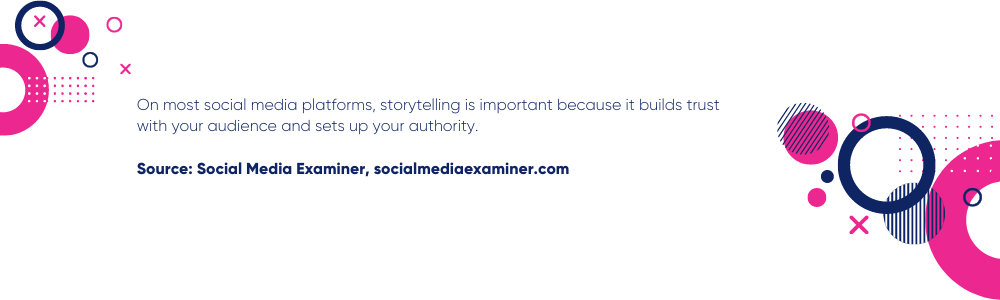
In the big, busy world of social media, content is king, but storytelling is its queen. Convey your brand's message through memorable experiences by telling engaging stories that resonate with your target audience.
Carefully choose and place relevant hashtags in social media posts to expand your reach and connect with a wider audience.
Analyze your social media analytics to identify peak times when your audience is most active and receptive.
By delivering your content at the right time, you increase the likelihood that people will connect with, comment on, and share it. This will increase your visibility and, indirectly, signal to search engines the value and relevance of your content.
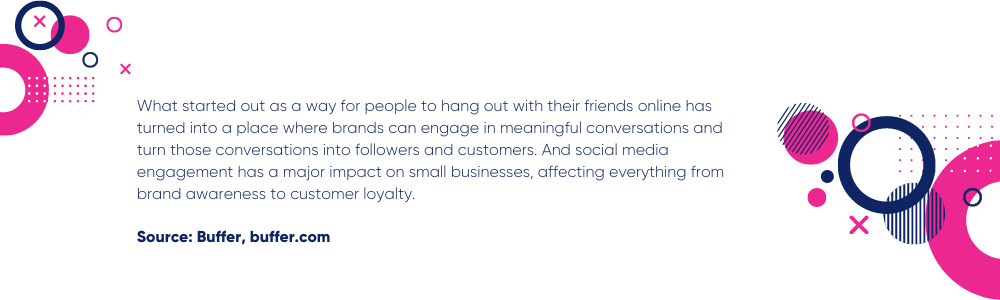
Engaging with your audience is important. Respond to comments, address their questions, and foster meaningful discussions. Empower your followers to actively participate in your brand's journey. By nurturing these relationships, you cultivate a loyal community and enhance your brand's influence in the digital landscape.
Multimedia grabs people's attention, piques your audience's curiosity, and motivates them to interact and share. By using visual and interactive elements, you can make your brand more visible, stir up emotions, and indirectly improve your search rankings by getting more people to connect with your content and share it.
Tips for Producing Engaging Content to Boost Visibility
Producing high-quality content on your social media pages can increase traffic and engagement, and eventually help build a thriving community. While producing engaging content increases your social media visibility, what about website traffic?
For instance, wouldn't it benefit your website rankings if consumers shared your content and included your website link?
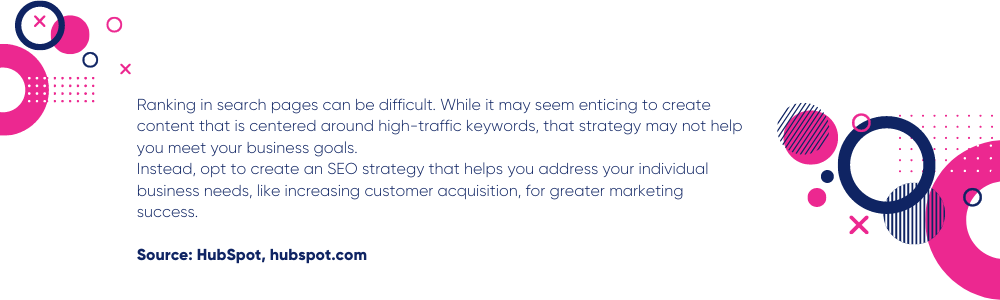
To establish rankings, Google uses a complex algorithm that considers a wide range of factors, including content quality and relevance, backlinks, user experience, and more.
A post is considered relevant to its audience when it receives strong engagement, such as shares, reactions, or widespread visibility. Here are some tips for creating more relevant posts:
Recognize the interests, preferences, and problems of your target audience.
Create material that speaks to their requirements and goals.
Use attention-grabbing visuals to successfully express your messages, such as images, videos, and infographics.
Create narratives that are true to your brand to engage your audience and connect with their emotions and experiences.
Give your viewers something of value by providing educational, entertaining, or problem-solving information.
Keep an eye out for mentions of your company, its products, competitors, or relevant keywords on social media.
Share behind-the-scenes images, user-generated content, and narratives that highlight your brand's human side.
Experiment with different content forms such as polls, quizzes, live videos, or user-generated content campaigns.
Employ clear, easy-to-read text, eye-catching components, and optimized layouts to enhance user experience on mobile.
Looking at the CognitiveSEO case study, you'll find some exciting conclusions about how social shares affect SEO. By the way, 23 million shares were examined.
Why Social Media Is Crucial for Your SEO Success
Let's go back five years and review what Google and Bing said regarding social media signals as a ranking component.
According to Bing, social media signals do influence their ranking algorithm. They believed that social media interactions, such as likes, shares, and comments, could be used to gauge a website's authority and importance.
Conversely, Google stated that social media signals are not directly considered in ranking decisions. However, Google acknowledges the value of social media in promoting brands and driving traffic, which may indirectly impact the success of SEO.
The bottom line: Social media´s influence on SEO success should not be understated, even though it may not be a direct ranking factor for search engines like Google.
Increase your online presence and achieve outstanding social media marketing and SEO results by consistently creating high-quality content, engaging with your audience, and effectively leveraging social media platforms.
This account is utilized to share insightful content about succeeding and thriving within the SEO industry, with a particular focus on strategies for success with Priority Prospect.
You keep hearing the term PBN or Private Blog Network. Maybe you saw it mentioned in an SEO forum, spotted it in a competitor analysis, or came across it while trying to understand why certain sites rank so well despite thin content and no obvious outreach strategy. In this article, you will learn what a […]
You have purchased domains with strong metrics and clean backlink profiles. Now you need to restore the content that made those domains valuable in the first place. This is where most operators hit a wall: manual restoration can take about 8-12 hours per domain. For a network of 20 or 50 domains, that's weeks or […]
The world of SEO is in a state of constant flux, and the past year has been particularly fascinating. As we move forward, it's more important than ever to keep an eye on the industry leaders who are paving the way and reshaping the landscape. In this article, we will highlight the top SEO experts […]